How to teach your 4-year-old to read

Teach letter shapes and their sounds, then show how familiar sounds join to make a word. Use short, adult-guided practice and review before adding something new.
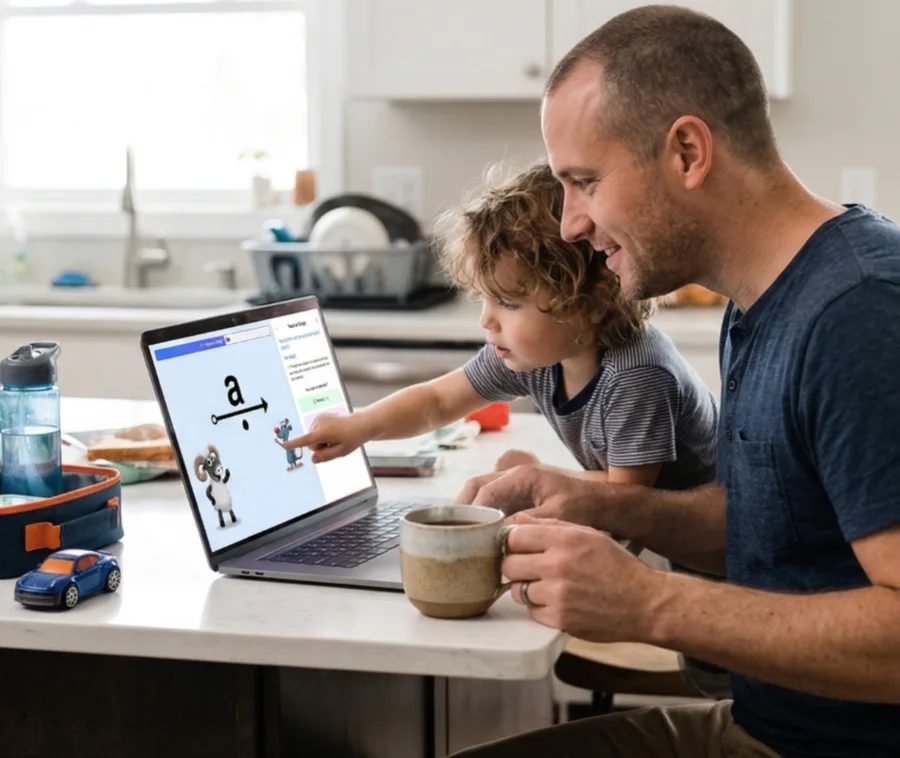
A father guiding his child through reading practice at the kitchen counter

Is my 4-year-old ready to learn to read?

Likely, yes. If your child recognizes the ❤️ shape, you can teach them to recognize m and make its sound, /mmm/. Starting to learn does not mean already knowing the alphabet or blending words. Model a sound-letter match if sounds are new, or demonstrate a blend if a few sounds are familiar. Their response helps you choose the next lesson.

Should a 4-year-old be able to read?

Your 4-year-old does not need to be reading independently already. Most children can start learning to read before their 3rd birthday. Learning letters and their sounds is already part of that process. Some children are beginning these connections; others can blend sounds and read simple words. Both are starting points for instruction. Teach the next skill your child needs, and keep reading richer stories aloud for language and understanding.

See Head Start's preschool literacy progression. These preschool descriptions are learning progressions, not individual reading deadlines.

What to look for

  • They can take part in a short activity with an adult's support.
  • They recognize a familiar shape or try a letter sound after you model it.
  • They notice a sound in a familiar word or try joining spoken sounds with your help.

If letter sounds are new, show m as a shape to recognize and model /mmm/. If a few sounds are familiar, show how to blend them into a word. Use what happens in that short practice to choose the next task, rather than treating these observations as an entrance test.

Almost 5? You do not need to finish a reading program before the birthday. Move into the age-5 and kindergarten guide when your child is ready for more connected reading.

Help sounds become words

Use Once's explicit teaching pattern: "I do, we do, you do." Model first, help your child try, then ask for an independent response. Keep new learning connected to earlier practice. The examples below are home activities.

Find the smallest useful starting point

Show a few letters your child has seen and ask for their sounds. Then try a spoken blend, such as /mmm/ /ē/, without print. A child who names letters but cannot give their sounds needs sound-to-letter practice. A child who knows sounds but cannot join them needs blending help. The free Reading Check can provide an approximate snapshot and suggested next skills. Our pre-K reading level guide shows what schools usually expect before kindergarten.

Teach a small set and review it

Choose useful letter-sound connections within one organized sequence. For a home example, you might practice m, s, and short a. Show m and model /mmm/, not "muh." Practice together, then point to it again for an independent try. Mix the cards so the answer does not depend on their order. Review familiar sounds before adding another. You do not have to finish the alphabet before blending.

Show the blend instead of saying 'sound it out'

Start with a word containing only taught sounds, such as "am" if a and m are familiar. Move your finger under the letters and connect /ă/ to /mmm/ without a long gap. Say the whole word. Try it together, then let your child try. Move to a three-sound word such as "Sam" when that is manageable. Our phoneme examples help with clear pronunciation.

Correct one thing and try again

If your child guesses "sat" for "Sam," point to the final m and model its sound. Blend the whole word together, then ask them to reread it. Do not ask for a guess from the picture. If every word takes heavy help, use easier words or fewer new sounds. Repeat familiar practice on another day instead of adding difficulty to meet a schedule.

Give reading a meaning

Once a few words are manageable, choose a short sentence or decodable text using those patterns. Explain any unfamiliar word and ask one question about what happened. Keep reading richer picture books aloud, too. Decoding practice and read-aloud conversation do different jobs; your child needs both.

Your first week

How to start teaching your 4-year-old to read this week. Try a short practice time on five days. Begin with what your child can do, and shorten the session before frustration takes over. This is a plan for noticing and practicing skills, not a promise to read by Friday.

  1. Day 1

    Find the starting skill

    If letters are new, start with m and /mmm/, using a familiar shape such as a heart to explain that letters have recognizable shapes, too. If sounds are familiar, try a spoken blend. Read a favorite story aloud afterward.

  2. Day 2

    Model a sound-letter match

    Teach one unfamiliar connection or review a small known set. Say it yourself, say it together, then invite your child to try.

  3. Day 3

    Blend familiar sounds

    If the sounds are secure, model a two-sound word. Otherwise repeat the sound-letter practice. Do not introduce a harder word just because it is Day 3.

  4. Day 4

    Read and build the same word

    Read a practiced word, say its sounds, and arrange letter cards to spell it. Write one of those letters while saying its sound.

  5. Day 5

    Check a fresh example

    Try a new word using known sounds, or show the letter cards in a different order. Note what needs less help. Choose next week's practice from that evidence.

Reading and writing at 4

Help your 4-year-old connect writing to the same sounds they are learning to read. Drawing, letter-like marks, and partial spellings still have a place alongside direct letter practice.

Say the sound as you form the letter

Model a lowercase letter your child knows. Tell them where to start, form it slowly, and say its sound. Let them copy a few times on a large surface. Use our writing worksheets for targeted practice, not a demand to finish every row. Worksheets follow Once's sequence, including specialized early letter forms, so choose material that matches your instruction.

Build a message without correcting everything

Have your child draw a pet or favorite toy and label it with a sound they can hear. If they write only m for "mom," acknowledge the sound they found and model the next sound together. You can write their dictated sentence below the drawing. Separate practice in a taught spelling pattern from freely expressing an idea.

What to use

Choose books, apps, and free resources for the skill you are teaching.

Books for two different jobs

Borrow picture books for you to read aloud. For your child to read, inspect the actual words in a beginner book; the age label alone is not enough. Choose a decodable book that matches taught sounds. A simple-looking book can still contain spellings your child has not learned.

Programs and apps, if you want one

A good choice depends on whether you want activities, independent practice, or adult teaching guidance. Khan Academy Kids is a free option with books and early learning activities. Once at Home is a paid, parent-led reading program with fully scripted, 15-minute lessons and coaching. You get a clear teaching sequence and exactly what to say, so you can focus on your child instead of planning each lesson. Compare formats in our reading-app guide.

When a preschooler gets stuck

Teach letter shapes and their sounds, then show how familiar sounds join to make a word. Use short, adult-guided practice and review before adding something new.

Sounds are familiar, but blending is not

Practice two sounds by ear and model bringing them closer together. Then use the same sounds with print. Avoid adding extra "uh" sounds, which make the blend harder. If your child can do it with you but not alone, continue supported practice.

Practice stays difficult

Share concrete examples with the preschool teacher or pediatrician, especially if you also have speech, language, or hearing concerns. You do not need to wait for kindergarten to ask about support. ASHA's early literacy guidance describes when professional input can help. For a younger starting point, use the age-3 guide without treating that as a setback.
A parent guiding her child through a Once reading lesson

A clear lesson for every day

Teach your child to read without planning the curriculum yourself

Once gives parents fully scripted, 15-minute reading lessons for children ages 3–7. You see exactly what to say, what to practice, and what comes next. An instructional coach is available when you have questions.

  • 200+ ready-to-go lessons
  • Parent-led, one-to-one instruction
  • Coaching and community support
  • Up to five children per subscription
Try Once for Free

Free until the first 3-letter word. Then $49/month; cancel anytime.

More questions about reading at 4

Does my 4-year-old need to know every letter before reading words?
No. They can practice blending words built from a small set of taught sounds while continuing to learn other letter-sound connections. The words should match what you have taught.
Should I use flashcards to teach my 4-year-old to read?
Letter-sound cards can help with brief review. Mix their order and connect the sounds to word reading and writing. Memorizing a large stack of whole words is not a substitute for learning to decode.